

We can track a parcel coming from across the ocean, but not our trash across the street
Do we really know where our waste actually goes?

Belated Waste Awareness Day, folks!
Um.. a waste what day?
Good question, hypothetical reader I created in my own mind. Every 21st February, Indonesia observes National Waste Awareness Day. This date commemorates something that urges governmental attention on our waste. Today, we'll get into the history behind it, and what exactly about our waste needs our attention.
It’s Mutiara here, your climate comms nerd from Indonesia. Before working primarily on comms, I spent time with waste startups and NGOs across my home land and my second home, Malaysia. I’ve visited what was once the country’s tallest landfill. I’ve taught in a school right next to a dumpsite (yes, we all could smell it from their classroom). That experience made me cry and throw up in the same afternoon. But it’s still one of the most important things I’ve ever done. 😌
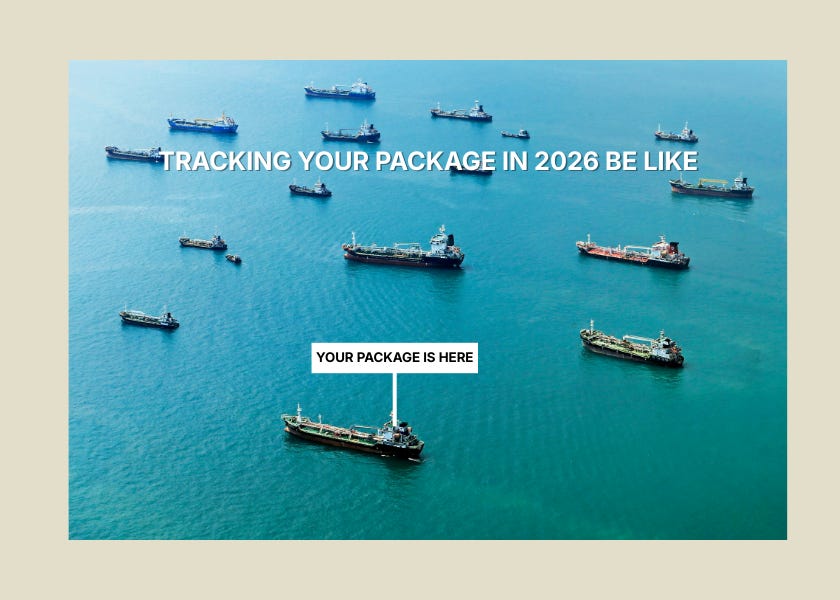
You order something online and you can watch it travel from warehouse to customs to your front door.
Within hours, the shop gets back to you with a tracking number, a barcode, an estimated arrival date, and a live map showing its location somewhere over the South China Sea.
It clears customs in your home country. A notification pings.
It’s out for delivery. Another ping. Then it’s at your front door.
This sophisticated level of tracking systems have been built to get products to consumers.
Now think about what happens to the packaging that came with that product.
The bubble wrap, the plastic sleeve, the cardboard box.
First, it goes in the bin. And from that moment on, it ceases to exist - at least as far as any system is concerned.
Where did it go? Who picked it up? What happened to it after that?
No tracking number. No barcode. No estimated arrival anywhere anymore.
That journey is scattered, informal, and largely invisible. Which is strange, if you think about it.
We’ve built an entire global infrastructure to watch a $4 phone case cross an ocean in real time. But, we have absolutely no idea what happens to our rubbish once it leaves the kerb.
I don't know about you, but I find that to be a bit bizarre.
How waste actually moves in most of the world
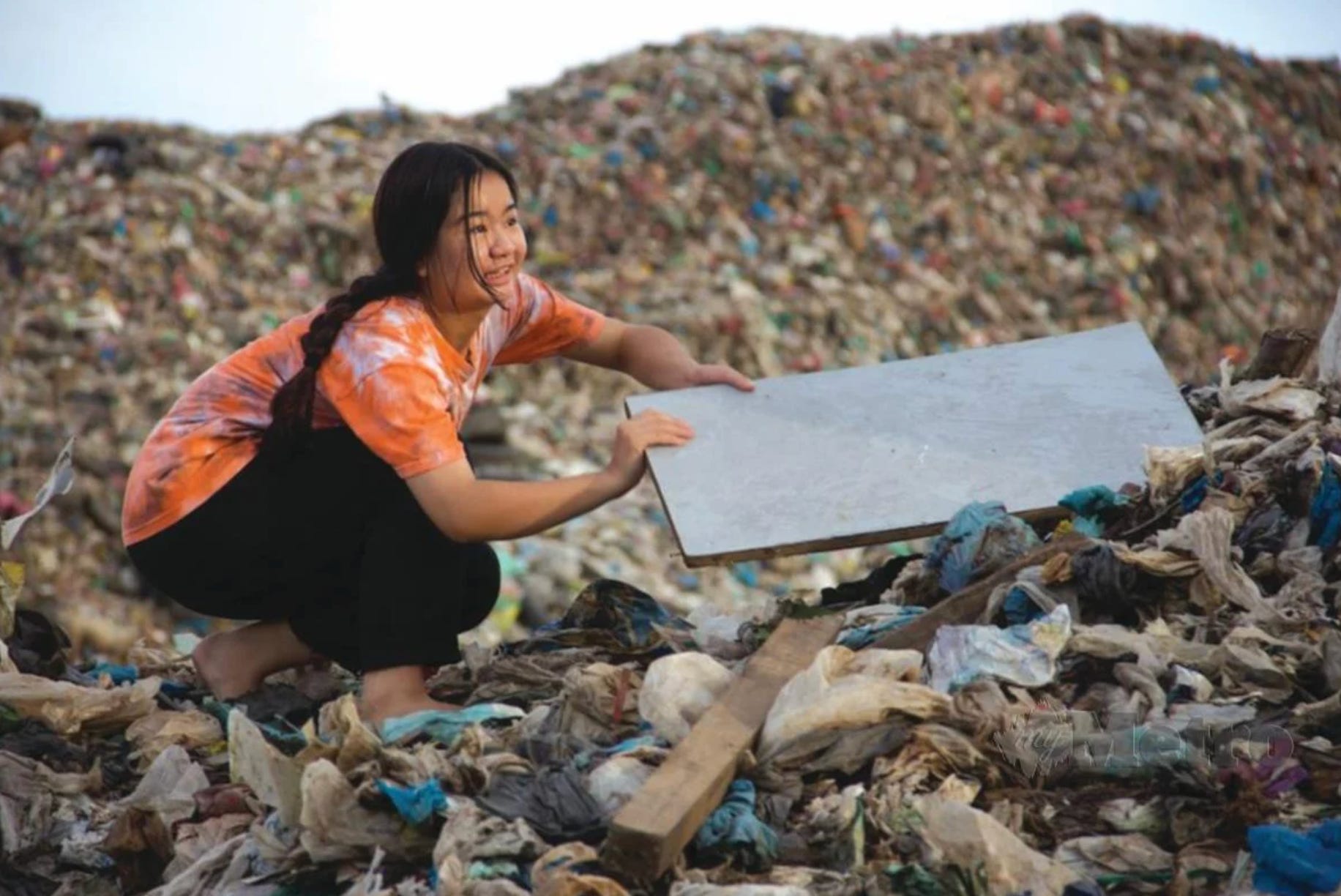
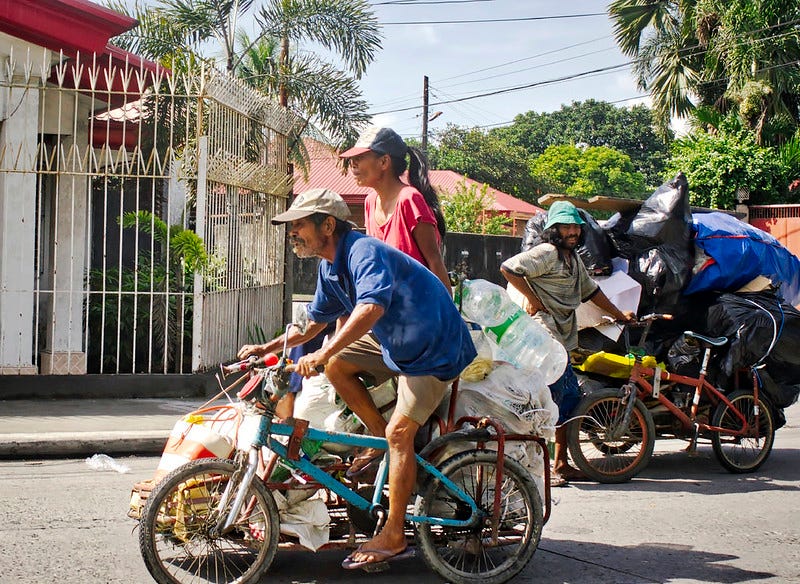
In places like Indonesia, the Philippines, India, and Vietnam, waste doesn’t travel through some automated conveyor system. It moves through people.
On the eastern outskirts of Indonesia, behind a wet market, Lisa starts her day before 5am.
Lisa is one of Indonesia’s millions of waste pickers — who collects, sorts, and sells recyclable materials for a living. It’s an unglamorous yet a very important work.
She pushes a wooden cart through residential streets, sorting through whatever residents have left out.
She separates bottles from food containers. Cardboard from paper. Glass from everything else. Done manually albeit sounding like it's done systematically.
She does this by hand, by sight, by the kind of knowledge that comes from doing the same thing for eleven years. She memorises this all by heart.
By midday, her cart is full. She wheels it to a local aggregator, a middleman who buys sorted recyclables by weight.
On a decent day, she earns around 40,000 to 60,000 rupiah. That’s roughly $2 to $4.
The aggregator sells her materials to a larger buyer, who then sells to a processor, who eventually feeds it into some supply chain somewhere.
None of this process is recorded. Not her collection volume, not the weight she delivers, not where the materials go after they leave her hands, not what eventually happens to them.
To the formal waste management system, Lisa doesn’t really exist. She has no receipts. No data trail. No proof she’s been doing this work at all.
And she’s not unusual. Across Indonesia, millions of informal waste workers like her recover a substantial share of the country’s recyclable materials.
They are, by any honest measure, providing a very important environmental service. But because nothing is documented, their contribution stays invisible — to governments, to brands, to anyone making decisions about waste infrastructure.
When the price of recyclables drops, which happens more regularly than you think, Lisa has no bargaining power and no safety net.
Sometimes the most rational decision is to burn what she’s collected, because it costs more to transport than it’s worth.
Bad for the environment, you'd say. That's a fair point, sure. But when you’re earning $4 a day, the environment isn’t your first concern.
So where does your rubbish actually go?
Here’s where this whole story starts to involve you, though.
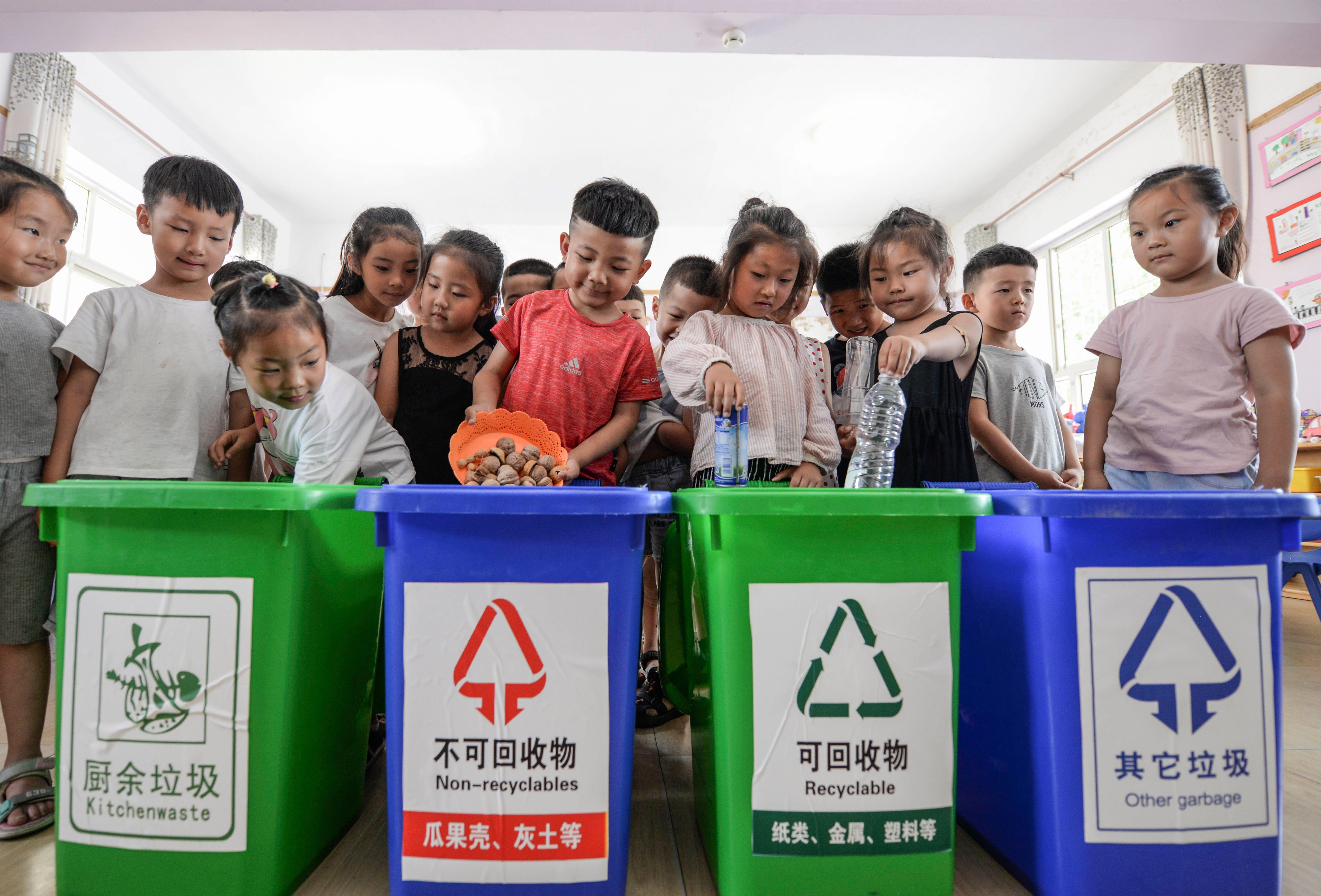
Maybe you’re someone who already separates your waste at home. You rinse the bottles, flatten the cardboard, keep the organics apart.
If you're doing that already, let me tell you that what you're doing is amazing. Because that matters more than you probably know. Even if you think it all gets chucked together at the end anyway.
When waste arrives pre-sorted, it’s worth more. It’s cleaner, safer to handle, and easier for someone like Lisa to sell at a better margin. In another word, your kitchen bin is the very first link in her supply chain.
But what happens after that? You’ve done your part. You’ve separated everything.
And then it all goes into a truck, and you never hear about it again.
Did the exact plastics you throw actually get recycled? Did your effort change anything at all?
You genuinely cannot answer that question. Neither can your local government, in most cases.
This process is all invisible. And it doesn’t just affect waste workers and policymakers. It affects whether any individual action — yours, mine, anyone’s — actually connects to a real outcome.
And when people can’t see that connection, they stop bothering. Participation gets fragile. The whole system loses momentum.
So about all those “recycled” products
That same invisibility also hollows out something else: the credibility of brands trying to do the right thing.
Walk into any supermarket and you’ll find products labelled “made from recycled materials” or “ocean plastic.”
These claims sound good. But if nobody can reliably trace where waste goes after it’s discarded, how is anyone verifying that those materials were actually recycled?
The honest answer is that in many cases, they can’t. Not properly at least.
The documentation is thin, the chains are long, and the tracking is almost nonexistent.
“Recycled content” potentially becomes a label built on good faith rather than evidence.
So the next time you pick up a product that says “made from 100% recycled plastic,” it’s worth asking: recycled from where? Collected by whom? Verified how?
What visibility could change
Waste traceability is the fix to this problem.
All it really means is recording how materials move through the system after someone throws them away.
Who collects them, where they end up, how they’re processed, and whether any of it actually gets recycled.
It sounds simple. But it isn’t. And what it makes possible matters a lot.
If Lisa's collection volumes were documented, her invisible labour becomes a measurable environmental service.
She gets data she can point to when negotiating with buyers.
Governments can plan infrastructure based on actual flows instead of rough estimates.
Investors can put money into systems that demonstrably work, rather than guessing.
And brands claiming recycled content would actually have something to back it up. Super important now more than ever as there are regulations requiring brands to have evidence on their environmental claims.
👉 Read our lowdown on the anti-greenwashing regulations that is a good news for us, mindful consumers.
The goal is giving an opaque, fragmented chain the same basic visibility that every other supply chain already has.
Traceability does for waste what tracking already does for parcels. It makes an invisible system legible.
This is the gap that Sirsak is working to close. Based in Indonesia, they're building systems that document how waste moves through the chain — making the invisible visible, and giving grassroots actors like Lisa the data to prove their impact.
One thing worth flagging, though: visibility on its own isn’t automatically a good thing.
If traceability systems are built primarily to serve requirements that corporations have, there’s a real risk that grassroots workers end up generating the data without seeing any of the benefit.
Their work becomes more visible, but their bargaining position stays the same. Or gets worse if larger players use that data to formalise and centralise operations over them.
How these systems are governed matters just as much as whether they exist.
Waste Awareness Day should be the time we start talking about traceability in our waste system
Remember the Waste Awareness Day we mentioned earlier? Well, here goes the history behind it.
Twenty years ago, at 2am on a Monday, a garbage mountain as tall as a 15-storey building at the size of 2 football (or soccer) pitches collapsed at the Leuwigajah landfill in West Java.
Heavy rain had been loosening the waste in the landfill for days. Methane gas, trapped inside the rotting piles, exploded. 2.7 million cubic metres of rubbish tore through two villages. 157 people died in their sleep.
It was a disaster born from exactly the kind of invisibility we're talking about here.
Waste that was out of sight, unmanaged, unmonitored, until it became a catastrophe.
Where do we go from here?
To be honest, I don't really have all the answer. But I can say that the system is starting to improve. Sirsak is one example of proof for that. Regulations like the EU’s anti-greenwashing directive are another.
Slowly, the systems that were never designed to see waste are being rebuilt by people who refuse to accept that it should stay invisible.
And if you’re reading this wondering what any of it has to do with you — it starts smaller than you think.
Separate your waste. Rinse the bottles. Flatten the cardboard. Talk about this stuff with people who’ve never thought about it. That’s not going to fix the system on its own. But every functioning system is built on a chain of people who decided to care about what happens next.
This piece was shaped by conversations with Violy, COO of Sirsak, striving for waste traceability systems. Read more about this manifesto in her original article.
If this article inspired you, share it with a colleague, community member, or friend.
Connect with the writer — Mutiara 👋
Are you new here? Subscribe to this newsletter for free.
Follow me on LinkedIn for more insights & zoom in on circular economy in Southeast Asia
I'm also a communications strategist for climate justice nonprofits, NGOs, and circular climate tech. Curious about my work or want to swap notes about impact communications? Grab a virtual coffee chat with me.